
7 Nov 2025
How Technology Is Redefining the Holiday Home Investment Landscape
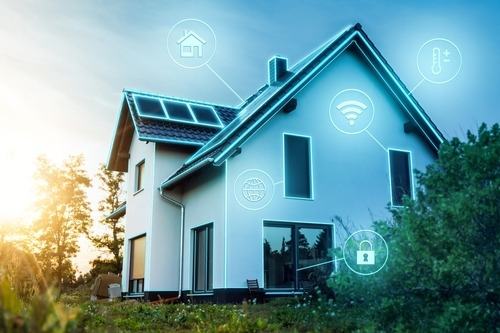
The holiday home sector is undergoing a profound transformation. Advances in smart technology, AI systems, blockchain, and PropTech platforms are not just enhancing convenience and security — they’re unlocking new layers of value, scale, and investor appeal. For investors, owners, and developers alike, integrating these innovations is fast becoming a competitive necessity.
Smart Home Infrastructure as a Value Driver
Smart home systems aren’t just “nice to have”—they’re increasingly expected by premium short-term renters and holiday-home buyers. By integrating such systems, you’re investing in features that raise both marketability and yield.
- Keyless entry & smart locks: You can grant remote, temporary access codes to guests or service personnel — removing the need for physical keys or in-person handovers.
- Automated climate & energy control: Smart thermostats, occupancy sensors, and advanced algorithms can reduce utility costs while maintaining guest comfort.
- Voice assistants & automation: Devices like Alexa or Google Home let guests control lights, blinds, entertainment, and more by voice — increasing guest satisfaction and perceived luxury.
- Remote security & monitoring: Cameras, motion detectors, and integrated sensor networks let owners monitor property health from thousands of miles away, enhancing security and risk mitigation.
These features not only support an enhanced guest experience, but also allow you to justify premium nightly rates, reduce operational friction, and protect your asset.
VR / AR: From Showroom to Closing Tool
In 2025, immersive digital experiences are critical in closing deals and attracting renters even before they ever step foot inside.
- Virtual property tours: High-fidelity 3D walkthroughs let prospective buyers or renters inspect every corner—accelerating decision-making and widening your potential market across geographies.
- AR interior visualization: Using augmented reality apps, you (or your buyers) can “place” furniture, experiment with layouts, or preview refurbishments virtually — reducing risk and design uncertainty.
These tools shrink the distance between offer and commitment, especially in international or remote-location investments.
AI & Big Data: Precision Pricing and Predictive Maintenance
Artificial intelligence and advanced analytics are now embedded into operational strategy — not just “add-ons.” For investors, that means smarter allocation, better yield, and lower capital leak.
- Dynamic pricing engines: AI systems continuously analyze local supply/demand, booking patterns, events, weather and competition to optimize nightly rates — often increasing revenue by 20–40%.
- Predictive maintenance: Embedded IoT sensors (for plumbing, HVAC, structure, appliances) can flag early warning signs of failure before they become costly repairs, prolonging asset life.
- Personalized guest marketing: AI profiles guest preferences and behavior, enabling hyper-targeted campaigns, upsell offers, and loyalty incentives — increasing repeat bookings and reducing acquisition costs.
By leveraging these insights, you transform your property from a static spreadsheet line into a data-optimized revenue engine.
Blockchain, Smart Contracts & Fractional Ownership
Blockchain has matured into a foundational technology for making property investing more efficient, transparent, and frictionless.
- Smart contracts: These self-executing agreements automate escrow, title transfer, rental payments, and compliance checks—with minimal intermediaries.
- Fractional ownership / tokenization: Platforms now allow multiple investors to own defined shares (tokens) of a holiday home, democratizing access and enabling liquidity. This widens your capital pool and enables scaling.
- Transparent, fraud-resistant ledgers: Blockchain ensures immutable records for deeds, payment history, and title provenance — reducing title risk and improving investor trust.
By applying blockchain to holiday homes, you’re turning illiquid real estate into more modular, tradeable, and secure assets.
IoT Ecosystems: Automating Operations & Risk Mitigation
The Internet of Things (IoT) connects every device and system within a property — from sensors to appliances — into a unified, responsive ecosystem.
Leak and flood detection: Water sensors detect drips or ruptures early, triggering alerts before widespread damage occurs.
- Energy management platforms: Smart circuits, real-time consumption monitoring, and predictive scheduling reduce waste and control utility costs.
- Automated check-in / check-out flows: Integrated systems manage guest arrival/departure, welcome messaging, remote lock control, and device activation — streamlining the guest journey.
- Smart environmental regulation: Integrated systems can balance airflow, humidity, lighting, and shading based on occupancy and time, enhancing comfort while optimizing power use.
These systems reduce overhead, minimize surprise losses, and allow your property to largely “run itself.”
PropTech Platforms & Marketplace Integration
The backbone of a modern holiday home business is the PropTech stack that connects operations, distribution, and analytics.
- Global marketplace exposure: Listing across Airbnb, Vrbo, Booking.com and niche luxury platforms expands your reach. Syncing tools ensure pricing and availability remain consistent.
- AI-powered matching platforms: Some PropTech solutions now use AI to match buyers or renters to ideal properties based on behavioral and demographic profiles.
- Real-time performance dashboards: You get instantaneous visibility over occupancy, yield, competitor benchmarking, guest ratings, and local trends — crucial for scaling and adaptation.
A modern tech stack gives you agility, transparency, and control over performance.
Emerging Trends & Market Forces (2025+)
To fully evaluate investment opportunities, it’s essential to stay attuned to macro trends influencing holiday home tech.
- Sustainability & smart resource management: More guests expect eco-friendly features (solar panels, energy recovery systems, water recycling). These not only reduce operating costs but also increase appeal.
- Remote-work stays / blended travel: Properties that offer co-working amenities, fast internet, and quiet workspaces draw longer-stay tenants and premium rates.
- Supply tightening / pricing power: In many mature markets, short-term rental supply growth is slowing — boosting pricing power for well-managed properties.
- Convergence of hotel & STR models: Hotel investors are increasingly acquiring whole short-term rental portfolios, while STR operators are adopting hotel-level services.
- Regulatory constraints & compliance risk: Local zoning, tax, licensing, and safety regulation remain key headwinds. A tech-driven property is better placed to manage compliance dynamically.
Investment Outlook & Strategy
Technology is not a cost center; it is a value multiplier. Holiday homes equipped with advanced systems:
- Command premium rates and higher occupancy because the guest experience is superior.
- Operate with fewer personnel, lower maintenance risk, and transparent performance metrics.
- Offer liquidity, transparency, and fractional ownership models that appeal to a broader investor base.
- Are future-proofed — ready to pivot or scale with evolving guest expectations or regulatory demands.
When assessing or developing holiday home projects, prioritize:
- A robust tech-stack (IoT + AI + PropTech)
- Modular design for upgrades
- Well-structured compliance architecture
- Sustainable and wellness features to elevate perceived value
- Investor-friendly models (e.g. fractional shares, smart-financed ownership)
In this new paradigm, the differentiator is not just location or design — it’s the sophistication of how your property thinks, optimizes, and performs.