
30 Oct 2026
The Future of Premium Living: Finding Eco-Friendly & Energy-Efficient Homes in Greece

Climate change, energy volatility, and the global push toward sustainability have propelled green architecture to the forefront of modern prime real estate (often called sustainable real estate). In Greece, a country blessed with over 300 days of sunshine annually yet increasingly exposed to intense Mediterranean heatwaves, the way we design and build residential properties is undergoing a fundamental transformation.
The era of energy-inefficient buildings burdened with high operating costs and inadequate thermal insulation is definitively over. Today, modern energy-efficient homes and nearly Zero-Energy Buildings (nZEB) deliver far more than a reduced carbon footprint: they offer superior indoor environmental quality, exceptional thermal comfort, and strong long-term capital preservation.
What does sustainable building truly entail in the Greek context, and what core elements define an authentic green residence?
What Is Green Architecture?
Green architecture (sustainable design) goes far beyond retrofitting a few rooftop solar panels. It represents a holistic engineering and design methodology engineered to minimize resource, water, and energy consumption throughout the building’s entire lifecycle, from material sourcing and construction to daily residential operation.
The primary benchmark is achieving top-tier energy performance (EPC Energy Class A+), ensuring the home consumes minimal power while frequently generating as much or more renewable energy than it requires.
Key Pillars of a Modern Energy Efficiency Home in Greece
Designing a resilient, sustainable residence in the Mediterranean climate requires bespoke engineering solutions tuned to local conditions.
1. Bioclimatic Architecture and Passive Solar Design
Building orientation forms the baseline of structural energy efficiency.
- Optimized Solar Orientation: Southerly orientations maximize natural daylight harvesting and passive solar heating throughout the winter months.
- Engineered Shading Systems: Fixed and dynamic louvers, deep overhangs, and strategic biophilic landscaping shield glazing from harsh summer solar heat gain.
- Cross-Ventilation Strategies: Exploiting prevailing coastal breezes and evening meltemi winds facilitates natural passive cooling, significantly trimming cooling loads.
2. High-Performance Thermal Envelopes and Glazing
The exterior building envelope acts as the first line of defense against ambient thermal swings.
- External Thermal Insulation Composite Systems (ETICS): Continuous exterior insulation eliminates thermal bridging, stabilizing interior temperatures year-round.
- Thermally Broken Aluminum Joinery: Low-Emissivity (Low-E) double- or triple-glazed units prevent heat transfer and block harmful UV radiation while preserving expansive views.
3. On-Site Renewable Energy Systems (RES)
Energy independence is now a viable reality for modern homeowners.
- Photovoltaic (PV) Solar Arrays (Net Billing): Harness abundant solar irradiance to power household appliances, heat pumps, and electric vehicle (EV) charging stations.
- Solar Thermal Collectors: Supply continuous domestic hot water (DHW) virtually cost-free for the vast majority of the year.
4. Advanced HVAC Systems and Heat Pumps
Replacing fossil-fuel boilers with high-efficiency air-to-water or geothermal heat pumps is the modern benchmark. Paired with radiant underfloor heating and VRV/VRF multi-split cooling systems, they deliver uniform interior temperatures with minimal electricity draw. Integrated Mechanical Ventilation with Heat Recovery (MVHR) ensures a continuous supply of filtered, fresh outdoor air without indoor thermal loss.
5. Smart Home Automation and Water Conservation
Integrated building management systems maximize operational efficiency.
- Smart thermostats, automated architectural LED lighting, and occupancy sensors optimize power consumption in real time.
- Rainwater harvesting cisterns and greywater recycling systems support automated landscape irrigation, drastically cutting municipal potable water demand.
For AVAX Development, these principles are an integral part of everyday design practice. Across every project undertaken, a dedicated effort is made to integrate bioclimatic solutions, modern thermal insulation, and renewable energy sources, contributing responsibly to sustainable real estate development. You can see how these choices are put into practice across AVAX Development’s projects, always aiming for the lowest possible energy consumption and genuine quality of living.
Comparison: Conventional Housing vs. Modern Green Home
| Parameter | Conventional Housing (Class D-C) | Green Energy-Efficient Home (Class A+) |
|---|---|---|
| Energy Consumption | High baseline dependent on fossil fuels | Minimal primary energy demand (nZEB standard) |
| Monthly Utility Expenses | Volatile and exposed to energy tariff spikes | Up to 70%-80% lower operational costs |
| Thermal Comfort | Inconsistent temperatures, drafts, moisture | Constant indoor climate and continuous fresh air |
| Carbon Footprint | Elevated greenhouse gas emissions | Net-zero or ultra-low carbon operational footprint |
| Asset Resale Value | Subject to rapid depreciation under EU mandates | Commands premium valuation and resilient buyer demand |
Why Sustainable Homes Are the Smarter Capital Investment
Investing in an eco-friendly property is not merely an ethical choice; it is a calculated financial move.
- Lower Total Cost of Ownership: Dramatic utility bill savings rapidly offset initial capital expenditures on advanced building technologies.
- Regulatory Future-Proofing: Evolving EU Energy Performance of Buildings Directives (EPBD) are making energy efficiency mandates stricter across member states. Top-rated properties remain fully compliant and protected against structural obsolescence.
- Occupant Health and Well-Being: Non-toxic finishes, low-VOC materials, optimal acoustic dampening, and humidity control foster an indoor environment that actively supports long-term physical wellness.
AVAX Development: Setting the Benchmark in Sustainable Living
As green architecture reshapes the Mediterranean built environment, AVAX Development translates these sustainable principles into tangible residential engineering across its portfolio:
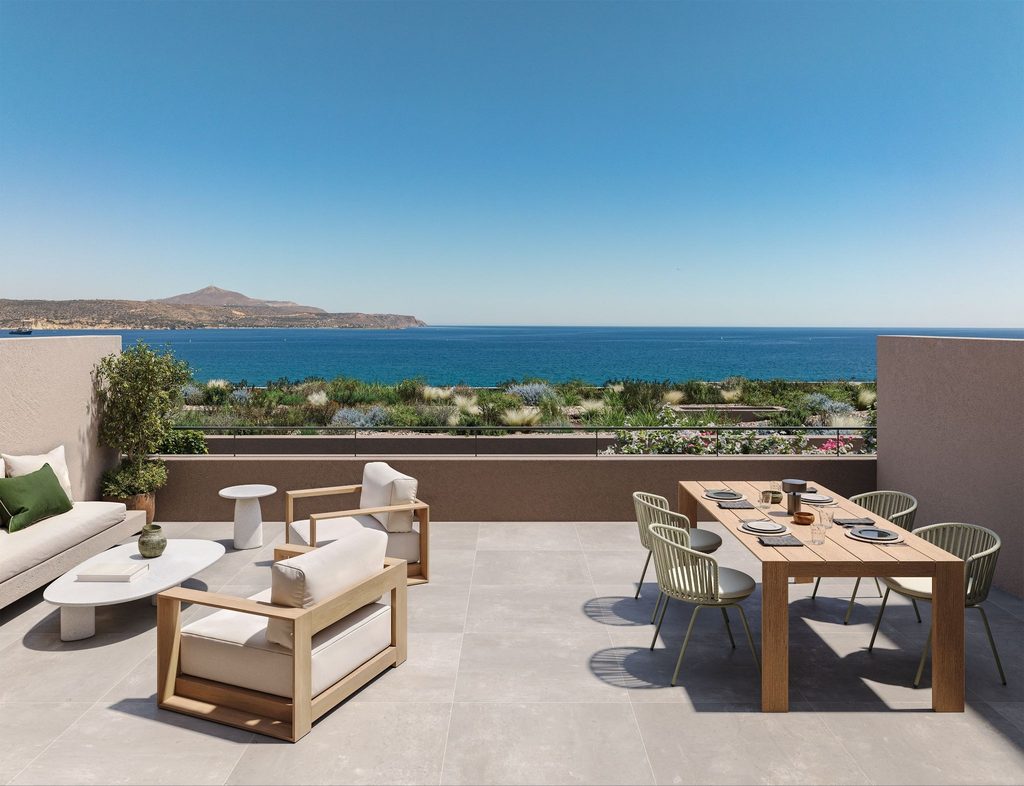
- Blue Echoes: Achieves an overall Class A+ rating through high-performance double masonry external thermal façades, waterfront-coated thermal-break aluminum double glazing, and fixed pergolas for passive solar shading. It couples on-site photovoltaic panels for communal energy needs and solar thermal collectors for hot water with high-efficiency concealed ducted heat pump systems, endemic flora green roofs, and EV charging provisions.
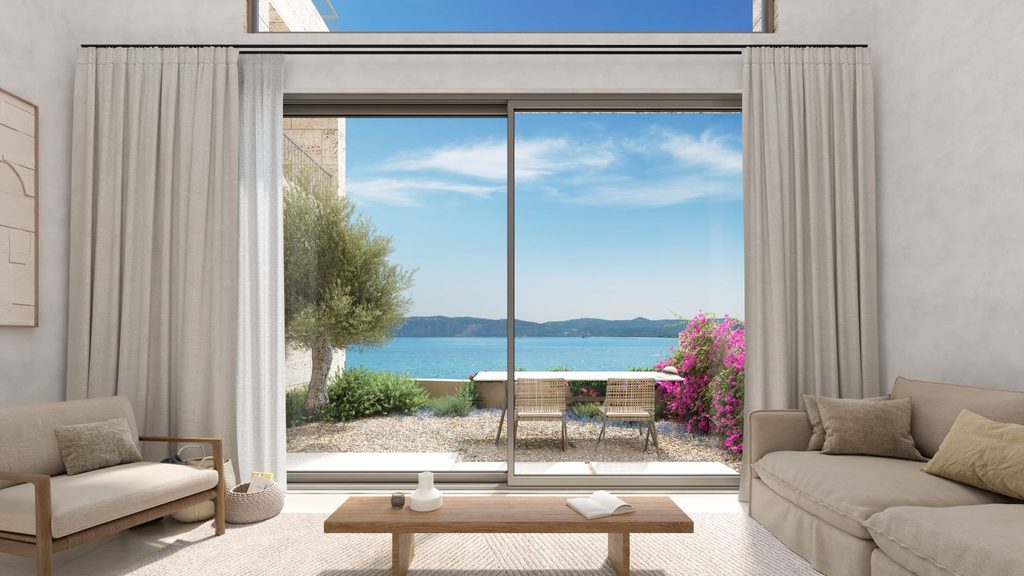
- Petra Salis: Features Class A+ energy performance driven by insulated double masonry thermal façades, specialized waterfront-grade thermal break joinery with double/triple glazing, and solar thermal collectors with boilers for domestic hot water, complemented by high-efficiency VRV heating/cooling, endemic green roofs, and eco-friendly pool systems.
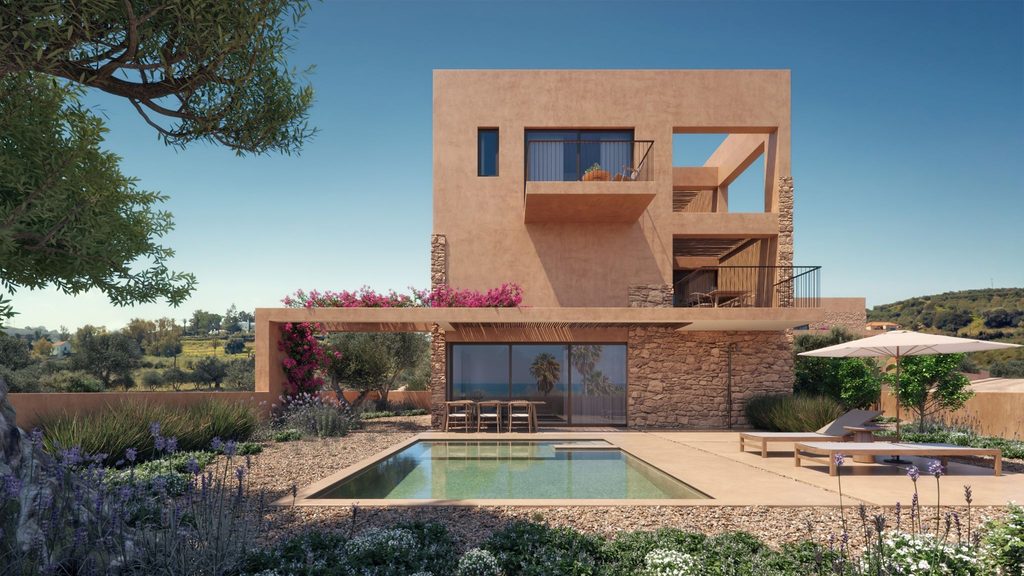
- Olealand: Delivers Class A+ energy performance featuring double masonry exterior walls with continuous thermal insulation, natural wood twig pergolas for solar shading, and thermal-break aluminum frames with double and triple glazing. It pairs dual-energy solar thermal panels and boilers with multi-room high-efficiency VRV climate systems, eco-friendly low-maintenance pool filtration, and communal landscaped gardens planted with endemic flora and automated irrigation.
By grounding each development in tailored passive design, renewable energy systems, and certified Class A+ efficiency, AVAX Development builds residences where operational sustainability and long-term durability naturally align.