Where Expats Choose to Live and Invest in Greece in 2025

Greece continues to rank high among expats seeking a mix of lifestyle, climate and long-term property value. In 2025, demand remains strong across both urban centers and island destinations, driven by international buyers, retirees and remote professionals. Below are the regions that stand out this year for living and property investment.

Athens: A Capital That Blends Culture and Contemporary Living

Athens remains the country’s most dynamic real estate market, offering variety and liquidity.

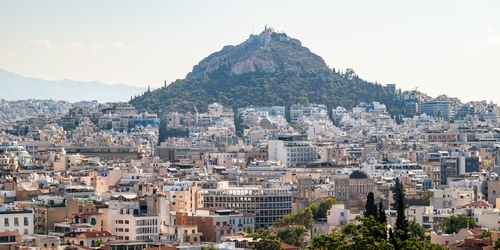
In the historic center, neighborhoods such as Kolonaki and Koukaki attract professionals and investors, with apartment prices continuing their upward trajectory—rising roughly 5% year-on-year by early 2025. Along the southern coastline, areas like Glyfada and Vouliagmeni form the well-known Athenian Riviera, where luxury residences, marinas and beach access define daily life. To the north, districts including Kifisia and Marousi appeal to families thanks to larger homes, greenery and proximity to international schools.

Best suited for: professionals, families and buyers focused on rental demand alongside lifestyle.

Crete: Year-Round Island Living with Depth and Community

Crete’s scale and infrastructure make it a consistent favorite among foreign residents.

Chania draws expats with its historic character, waterfront appeal and growing international population. Heraklion offers a more urban environment with competitive pricing, while Rethymno balances coastal living with cultural life. The island’s hospitals, airports and universities make it suitable for permanent relocation rather than seasonal use only.

Best suited for: retirees, digital nomads and families seeking affordability and stability.

The Cyclades: Iconic Aesthetics with Increasing Regulation

The Cycladic islands remain globally recognizable, but 2025 highlights a shift toward tighter oversight and selective investment.

Paros and Naxos continue to gain ground as alternatives to more saturated markets, offering strong lifestyle appeal with comparatively moderate prices. Milos came into focus in 2025 after environmental authorities halted a luxury development, underlining the importance of regulatory compliance. Mykonos and Santorini remain premium destinations, though most qualifying properties now exceed the higher Golden Visa thresholds. Koufonisia stands apart as a small-scale, low-density island attracting buyers who value exclusivity over volume.

Best suited for: high-net-worth individuals, second-home buyers and lifestyle-driven investors.

Thessaloniki: Northern Growth with Urban Energy

Greece’s second-largest city offers a different investment profile from Athens.

With a strong student population, a revitalized waterfront and ongoing infrastructure upgrades, Thessaloniki maintains steady rental demand. Property prices remain more accessible, often ranging between €150,000 and €300,000, making it attractive for buyers focused on growth rather than prestige.

Best suited for: younger expats, investors and buyers seeking emerging urban markets.

Peloponnese: Space, History and Value

The Peloponnese is increasingly appealing to expats who prefer mainland living without island pricing.

Nafplio stands out for its architectural beauty and cultural heritage, while Kalamata is developing into a lifestyle destination with beaches, modern services and improving transport links. Across the region, buyers can still find spacious homes—often traditional stone properties—at prices well below island averages.

Best suited for: retirees, families and second-home buyers seeking authenticity.

Dodecanese Islands: Sustainability Comes to the Fore

The Dodecanese combines historic destinations with forward-looking initiatives.

Astypalaia has become a reference point in 2025 for sustainable island living, thanks to its electric mobility programs and renewable energy projects. Rhodes and Kos remain popular tourism-driven markets, but Astypalaia’s long-term environmental strategy sets it apart for buyers focused on future resilience.

Best suited for: eco-conscious expats and investors with a long-term horizon.

Northern Greece and Mountain Regions: A Different Pace of Life

Away from the coast, northern and mountainous areas offer an alternative Greece.

These regions provide cooler climates, lower entry prices and opportunities tied to eco-tourism or traditional village restoration. The lifestyle is quieter and less tourist-oriented, appealing to those seeking deeper integration into local communities.

Best suited for: nature-focused expats, entrepreneurs and buyers prioritizing affordability.

Key Investment Factors for Expats in 2025

Before purchasing, expats should consider several market realities:

  • Golden Visa thresholds: €800,000 in prime zones, €400,000 elsewhere and €250,000 in specific conversion or restoration cases, often with minimum size requirements.
  • Short-term rental limits: New restrictions affect parts of central Athens and non-compliant property conversions.
  • Environmental oversight: Projects lacking proper permits face heightened scrutiny, reinforcing the need for due diligence.
  • Return strategies: Long-term rentals and lifestyle properties in Crete, the Peloponnese and Athens suburbs remain strong and compliant options.

Practical Considerations When Relocating

  • Residency options: Digital nomad visas, retirement permits and Golden Visa routes each suit different profiles.
  • Healthcare: Both public and private systems operate nationwide, with private coverage commonly chosen by expats.
  • Education: International schools are mainly concentrated in Athens and Thessaloniki.
  • Community: Established expat networks are strongest in Crete, Athens and selected islands.

Final Outlook

In 2025, Greece continues to offer expats a rare balance of lifestyle quality and property value. While prices are rising, the country remains competitive compared to many European markets.

Athens delivers culture and urban energy.
Crete and the Peloponnese offer community and value.
The Cyclades retain their luxury appeal amid tighter regulation.
Thessaloniki presents growth and affordability.
Astypalaia points toward a green future.

From city apartments to island villas, Greece offers options that match a wide range of expat lifestyles and investment goals.

AVAX Group Financial Results 2022

• €39.9 million Net Profit
• Substantial reduction in Net Debt, by €108 million (-33%)
• €0.07 dividend per share (8.3% return)
• Increase in work-in-hand to €2.2 billion

Athens, April 26, 2023: AVAX Group (the «Company») announces its financial results for 2022, a year in which Group activities continued to be restructured and important new projects were added, which are expected to lead to further profitability.

More specifically, according to financial accounts for 2022, consolidated Group turnover from continuing operations, ie excluding the discontinued operations of subsidiary Volterra SA, fell 32% to €402.7 million versus €592.2 million in 2021, due to considerable delays in the start of newly awarded projects.

PROFIT RISE – DIVIDEND DISTRIBUTION

Group EBITDA from continuing operations reached €58.2 million versus €51.0 million in the previous year. It should be noted that the adjusted EBITDA for all continuing and discontinued Group operations amounted to €82.3 million in 2022. Parent company EBITDA reached €89.3 million in 2022, up from €20.1 million in 2021.

Net Group profit amounted to €39.9 million in 2022 versus a €12.4 million loss in 2021, while net profit at parent Company level reached €50.8 million as opposed to €22.6 million in 2021. In line with its strategy, the Company decided to propose to shareholders the distribution of a €10.1 million dividend for 2022, which corresponds to a €0.07 dividend per share.

FURTHER REDUCTION IN DEBT

The Group’s total bank debt dropped to €307 million at the end of 2022, following repayments amounting to €135,3 million during the year, while net debt was €108 million lower (-33%), reaching €220.4 million at the end of 2022. It should be noted that total Group debt in the last couple of years is reduced by million, with further repayments scheduled for 2023. Group financial expenses also moved lower, amounting to €20.7 million in 2022, versus €22.3 million in 2021.

GROWTH IN WORK-IN-HAND

Work-in-hand increased, both in terms of value and quality, with the addition of projects offering superior profitability relative to the past, thereby providing long-term visibility for further improvement of financial return and reward of shareholders. As of the end of 2022, the Group’s work-in-hand amounted to around €1.9 billion (vs around €1.4 billion at end-2021). During 2023, the group has signed new contracts worth €274 million while there are also contracts worth €43 million pending to be signed. Taking into account all the above contracts, however excluding the execution of projects during 2023, the Group’s work-in-hand currently stands at €2.2 billion.

STRENGTHENING CONCESSION SEGMENT

As part of its strategy for the gradual transfer of Group participations in concession and PPP projects to “AVAX Concessions SA”, which is a 100% subsidiary, during 2022 the Group completed the process of transferring the 23.61% stake in “Aegean Motorway”, as well as the 19.1% participations in “Olympia Motorway SA” and “Olympia Motorway Operation SA”. The portfolio value of Group participations in concessions, PPPs and marinas remains high, offering a substantial dividend on a long-term horizon, while the Group participates selectively in the tender process for new concessions and PPPs in Greece.

In the context of the strategic decision to reduce bank debt and optimal utilization of assets, the Group divested from certain non-core activities and participations in mature concessions, selling a 112MW RES project portfolio of its subsidiary Volterra SA and a 20.53% stake in the Rio Bridge concession.

GROWTH TRAJECTORY IN 2023

AVAX Group is at the forefront of bidding for large public and private projects implemented in Greece, while also being a prime contestant in tenders for concession contracts and PPPs, seeking to boost its turnover and work-in-hand. Moreover, it is evaluating new opportunities, both due to the multitude of projects under auction in Greece, but also due to the changes taking place and corresponding rise in investments in market segments of its expertise (Natural gas infrastructure, Power plants).

The completion of major infrastructure projects, the new projects added lately, as well as the size of its project backlog, give rise to prospects for strong future profitability. The Group continues to strengthen and grow, contributing to the creation of a new generation of infrastructure projects and to the strengthening and support of the Greek economy and society, while adhering to the principles of environmental protection and corporate governance.

AVAX Group Financial Results 2021

Increase in Construction Activity and Work-in-Hand, Debt reduction, Discontinuation of Energy Operations.

AVAX Group (the “Company”) announces its financial results for 2021, a year of regrouping due to the strategic decision by management to focus on construction and concession/PPP activities.

In 2021, the Group produced a high free cash flow which was used to relax of a significant part of debt liabilities. It also achieved a significant increase in turnover from construction and a large increase in work-in-hand, setting the ground for improved financial performance in 2022.

More specifically, according to the financial statements for 2021, consolidated turnover from continuing operations increased 28% to €592.2 million compared to €462.7 million in 2020. On a consolidated basis, taking into account continuing operations, AVAX Group presented a net after tax profit of €2.0 million in 2021 compared to a €10.5 million profit in 2020. Profit before tax, interest and depreciation (EBITDA) of the Group from continuing operations amounted to €51.0 million in 2021 versus €62.3 million in the previous year.

The drop in Group profitability is due to the impact on construction cost from international price inflation of construction materials, electromechanical equipment, fuel and transport costs, from the last months of 2020 until today. Price increases range between 25% and 70%, with no indication that this phenomenon will be reversed in coming months. The Company ensures that new contracts for private sector projects and international markets include a price revision clause for materials and fuels. For domestic public works, price increases are met to a large extent by relevant legislation.

It should be noted that 2021 financial results were burdened with extraordinary and non-operating charges due to write-off of doubtful receivables and other provisions amounting to €15.7 million, versus €17.1 million in 2020.

Net debt & leasing liabilities from continuing operations of the Group fell to €381.4 million during 2021 from €511.6 million at the end of 2020. There was a corresponding reduction in financial expenses, which amounted to €22.3 million in 2021 against €24.3 million in 2020.

Under the guidance of a financial advisor, the Company has commenced talks with interested investors for Volterra SA. For the time being, there is no agreement or conclusion of negotiations regarding the full transfer or partial sale of Volterra. The Company will publish on 27.04.2022 its financial statements for 2021, featuring the probable discontinuation of relevant operations, as per IFRS 5.

At the end of 2021, Group Work-in-Hand reached approximately €1.4 billion, compared to €1.0 billion at the end of 2020. After 31.12.2021, the group has signed new contracts, while there are several contracts pending to be signed, with a total value of around €0.8 billion. Taking into account all the above projects, the work-in-hand stands at some €2.2 billion.

Marousi, April 27, 2022
THE BOARD OF DIRECTORS

Search

×
×
DOWNLOAD FLOOR PLAN

Book an appointment

×